

Septoplasty | Deviated Septum
Septoplasty for a Deviated Septum
Many people confuse a deviated septum and Septoplasty for the same thing.
Many of our patients use the terms deviated septum and septoplasty interchangeably, but they are not the same thing. A deviated septum is an internal structural problem (inside the nose). Septoplasty is the procedure we perform to correct that problem and restore your breathing to normal.
The nasal septum does more than divide your nostrils – it helps maintain open, healthy airways that allow you to breathe comfortably day and night. When the septum is significantly displaced or crooked, your airflow is blocked contributing to sinus issues and affecting your quality of life. In these cases, we may recommend septoplasty to improve your nasal function.
Expert facial, reconstructive, and cosmetic surgeon Dr. Martin Stepanyan draws on his more than 22 years of experience helping his patients understand their options for correcting a deviated septum and breathing better.
We invite you to schedule a consultation by contacting us online or calling (818) 551-0088.
What Is Septoplasty?
Septoplasty is a functional nasal surgery that corrects a deviated or misaligned nasal septum. The goal is to improve airflow through the nose and relieve symptoms such as:
- Difficulty breathing through one or both nostrils
- Frequent or recurring sinus infections
- Chronic nasal congestion
- Nosebleeds related to a dry, exposed septum
- Facial pressure or headaches linked to nasal obstruction
- Snoring or sleep-disordered breathing, including sleep apnea in some patients
During septoplasty, Dr. Stepanyan straightens or repositions the septum. He reshapes or removes portions of bone or cartilage that block the airway, while preserving the nose’s structural support.
What Causes a Deviated Septum?
Mild septal deviations are very common, and many people are born with them. A more severe deviation may be:
- Congenital (present from birth): The septum formed off-center as the face developed.
- Post-traumatic: The result of an injury or trauma to the nose, such as a sports injury, fall, or accident.
Signs that you may have a deviated septum can include:
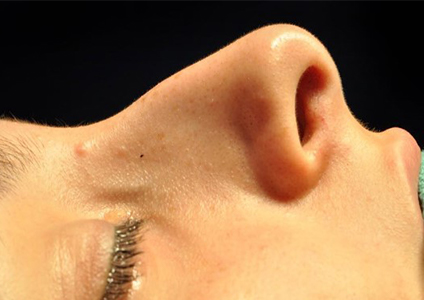
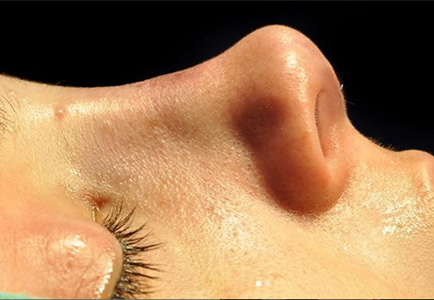
- The bridge of the nose appearing crooked, slanted, or with a visible “bump”
- Uneven or off-center nostrils when viewed from the front or from above in a mirror
- A large dorsal hump or obvious asymmetry of the nasal profile
- Persistent blockage on one side of the nose
If your main concern is breathing and you are not looking for cosmetic changes, you may be an excellent candidate for septoplasty alone. During your consultation, Dr. Stepanyan will examine the inside and outside of your nose, discuss your symptoms, and recommend the best approach for your needs.
Septoplasty vs. Rhinoplasty
Though septoplasty and rhinoplasty involve the nose, they are different procedures with different goals.
- Purpose
- Septoplasty: Corrects a deviated or misaligned septum to improve nasal airflow and relieve functional symptoms.
- Rhinoplasty: Primarily reshapes the nose to change its size, profile, tip, or overall appearance. It may also address breathing issues when combined with septoplasty.
- Anatomy Addressed
- Septoplasty: Focuses on the internal septum (the wall of cartilage and bone between the nostrils).
- Rhinoplasty: Works on the nasal bones, cartilage, and soft tissues that affect the external shape of the nose.
- Recovery and Appearance
- Most patients return to many normal activities within a week after septoplasty.
- Septoplasty alone should not significantly change the external appearance of the nose. When cosmetic changes are desired, septoplasty can be combined with rhinoplasty in a single surgery.

Why Choose Dr. Martin Stepanyan for Septoplasty?
Choosing the right surgeon is the best way to achieve safe, lasting results for a comfortable breathing experience. Here’s why Dr. Stepanyan is your best option.
Experience and Training
- Over 28 years of experience in facial surgery and more than 23 years in active practice
- Board-certified surgeon with extensive training in maxillofacial, reconstructive, and facial cosmetic surgery
- Expertise in managing complex functional and cosmetic nasal concerns, including obstructive sleep apnea and post-traumatic nasal deformities
Advanced Planning and Technology
- Thorough, unhurried consultations focused on your symptoms, medical history, and goals
- Use of advanced three-dimensional imaging when appropriate to analyze septal deviation and nasal anatomy
- Customized surgical plans that prioritize both nasal function and overall facial balance
Safety and patient-centered care
- Procedures performed in an AAAHC-accredited surgery center equipped with modern technology and safety protocols
- Emphasis on natural-looking results, stable nasal support, and long-term breathing improvement
- Ongoing follow-up and support throughout your healing process
What Does the Septoplasty Procedure Involve?
While your situation is unique, septoplasty typically includes the following stages.
Consultation and Evaluation
Your journey begins with a detailed, pre-operative consultation. Dr. Stepanyan will:
- Review your breathing concerns, prior nasal injuries, health history, and any previous nasal surgery
- Examine both the internal and external structures of your nose
- Discuss your goals, including whether you are interested in cosmetic changes at the same time
- Use imaging and endoscopic evaluation as needed to map out your septal deviation and nasal passages
From there, he will design a personalized surgical plan tailored to your anatomy and lifestyle.
Day of Surgery
Septoplasty is performed under anesthesia. In many cases:
- A small incision is made inside the nostrils, resulting in no visible external scars
- The lining of the septum is carefully lifted to expose the underlying bone and cartilage
- Deviated or obstructing portions are straightened, reshaped, or conservatively removed to open the airway
- Internal splints or soft packing may be placed to help the septum heal in its new, straighter position
Dr. Stepanyan’s background in reconstructive surgery allows him to work with great precision, preserving support while relieving obstruction.
After the Procedure
Immediately after your surgery, you can expect:
- Nasal stuffiness or congestion for several days as swelling peaks
- Mild to moderate discomfort, typically managed with prescribed medications
- Instructions on how to care for your nose, including avoiding nose blowing and strenuous exercise for a set period
If internal splints are used, Dr. Stepanyan usually removes them at a follow-up visit. Patients often describe the splints as more “uncomfortable” than painful. Most people can return to office work or school within a week, depending on their healing progress and the demands of their job.
Advanced Specialization in Cosmetic and Reconstructive Surgery: Why Choose Dr. Stepanyan for Ethnic Rhinoplasty in Glendale
Dr. Martin Stepanyan is a board-certified surgeon with over 16 years of academic excellence, extensive training, and over 23 years of successful private practice in Cosmetic & Reconstructive Surgery and Maxillofacial Surgery.
Choosing the right surgeon is key to achieving the best results from ethnic rhinoplasty. Dr. Martin Stepanyan stands out as a top choice for individuals seeking a surgeon who understands the delicate balance of ethnic features and can deliver beautiful, natural results.
With over 28 years of experience in facial surgery, Dr. Stepanyan combines advanced surgical skills with a compassionate, patient-centered approach.
His extensive training in both cosmetic and reconstructive facial surgery enables him to address aesthetic and functional concerns, delivering results that enhance each patient’s natural beauty. Furthermore, Dr. Stepanyan uses advanced three-dimensional imaging technology to provide patients with a clear visual representation of their expected outcomes before the procedure, helping to manage expectations and ensure satisfaction.
As a board-certified surgeon and a Fellow of prestigious professional organizations, Dr. Stepanyan operates in a state-of-the-art, AAAHC-accredited surgery center, prioritizing patient safety and comfort at all times.
His approach is supported by decades of additional training, experience, and professional achievement, including:
- More than 2,000 nasal surgeries have been performed throughout Los Angeles County, including complex revision cases for patients who travel from out of state seeking his expertise
- Board-certified since 2003, with recertification extending through 2033
- Fellow of the American Academy of Cosmetic Surgery (FAACS)
- Fellow of the American College of Surgeons (FACS)
His professional experience extends well beyond private practice. Dr. Stepanyan graduated first in his class with a 4.0 GPA from the University of Pennsylvania School of Dental Medicine, and then completed a cosmetic and reconstructive surgery fellowship under T. William Evans, MD, FACS, at The Ohio State University. He has also:
- Co-authored research published in The American Journal of Cosmetic Surgery
- Served as Division Chief at Huntington Memorial Hospital (2005 to 2007) and Methodist Hospital of Southern California (2007 to 2009)
- Participated in craniofacial reconstructive missions in Ecuador, Armenia, and Russia
Patients consistently point to the consultation experience as one of the reasons they choose Dr. Stepanyan. Lianna M. called him “the only doctor who captured my attention with all the knowledge he had,” and Vicki D. contrasted him with other surgeons who “made me feel they were only out for the money and a quick job.”
Every consultation is centered on understanding your anatomy, concerns, and goals before recommending a personalized treatment plan. Supported by trilingual staff fluent in English, Armenian, and Russian, the practice provides culturally informed care for Glendale’s diverse communities while creating results that look refined rather than obviously surgical.
As patient Naeva O. shared, people “couldn’t even tell” she had work done, reflecting the natural-looking outcomes Dr. Stepanyan strives to achieve. That same personalized approach guides Dr. Stepanyan’s philosophy of enhancing rather than westernizing the nose.
Patients also benefit from an integrated surgical setting. Dr. Stepanyan performs procedures at his AAAHC-accredited Glendale surgical center, which includes three fully equipped operating rooms and an on-site 23-hour ambulatory recovery center.
This allows patients to undergo surgery and recover under the same experienced team, providing continuity of care from the operating room through the early stages of recovery.
Dr. Stepanyan’s Glendale practice welcomes patients from throughout Burbank, Pasadena, Beverly Hills, Studio City, and the greater Los Angeles area, with extensive experience treating diverse minority and immigrant communities in the region.
Recovery Timeline: What to Expect After Septoplasty
While every patient heals at a different pace, a general timeline may include:
- First week:
- Noticeable congestion, pressure, and mild soreness
- Bruising is usually minimal with septoplasty alone
- Splints, if placed, are commonly removed within 5 to 7 days
- 2 to 4 weeks:
- Swelling and congestion gradually improve
- Many normal daily activities can be resumed, following your surgeon’s guidance
- Several months:
- Internal healing continues as swelling slowly subsides
- Breathing often keeps improving as tissues soften and settle
If you combine septoplasty with cosmetic rhinoplasty or other facial procedures, recovery may be more involved and take more time for swelling to fully resolve.
Combining Septoplasty with Cosmetic Nasal Surgery
For some patients, trauma or long-standing deviation has changed the appearance of the nose as well as its function. In these cases, it can be beneficial to:
- Correct the deviated septum with septoplasty
- Improve the external shape and balance of the nose with cosmetic rhinoplasty at the same time
Dr. Stepanyan can address internal breathing issues and external aesthetics in one surgery and one recovery period if you choose to combine the procedures. This approach can enhance both confidence and quality of life.
Revision Rhinoplasty for Ethnic Patients: Correcting Results That Missed the Mark
Revision rhinoplasty for ethnic patients is among the most demanding work in facial surgery because two layers of difficulty stack on each other.
Scar tissue and altered anatomy from the first surgery sit over the original cultural and structural complexity that made the primary rhinoplasty challenging to begin with.
Previous surgery can also limit the amount of septal cartilage available for reconstruction. When additional support is needed, cartilage is often harvested from the ear or rib, adding another level of technical complexity that fewer rhinoplasty surgeons routinely manage.
These are the cases that many surgeons refer elsewhere, and patients frequently travel from out of state to seek Dr. Martin Stepanyan’s expertise.
The Healthgrades reviewer from December 2025 described a prior surgeon who insisted on closed rhinoplasty despite a complex nasal break, delivered an inadequate result, and left the patient unable to breathe properly for more than a year before Dr. Stepanyan corrected both the aesthetics and the breathing through open surgery. The reviewer wrote that they would never consider another surgeon.
Every revision begins with a detailed evaluation of the previous surgery, remaining structural support, scar tissue, healing, and nasal function before a personalized treatment plan is developed. Because previously altered anatomy is less predictable, the goal is to achieve meaningful improvement and better facial balance rather than perfection.
For that reason, candidacy can only be determined through an in-person consultation. Patients who travel from outside California often do so because Dr. Stepanyan combines extensive experience in ethnic rhinoplasty with the reconstructive expertise required for complex revision cases.
Will Insurance Cover Septoplasty?
Septoplasty is often considered a medically necessary procedure when a deviated septum causes documented breathing impairment or related functional problems. In these cases:
- Insurance may cover part or all of the septoplasty
- Cosmetic changes performed at the same time are typically not covered and are paid out-of-pocket
Our team can help you review your benefits, obtain any necessary pre-authorizations, and explain estimated out-of-pocket costs. If you are considering combining septoplasty with cosmetic nasal surgery, we will clearly outline the functional versus cosmetic portions of your treatment plan.
Improved breathing can lead to better sleep, increased daytime energy, and greater comfort during exercise and daily activities. Many patients also feel more confident when functional and cosmetic concerns are addressed together.
Is Septoplasty Right for You?
You may be a good candidate for septoplasty if you:
- Have trouble breathing through one or both sides of your nose
- Have frequent sinus infections or nasal congestion that have not improved with medical treatment
- Experience nosebleeds related to septal deviation
- Snore or have sleep disturbances associated with nasal blockage
- Have a history of nasal trauma or visible crookedness of the nose
During your consultation, Dr. Stepanyan will discuss all non-surgical and surgical options so you can make an informed decision.
Los Angeles Septoplasty FAQs
After septoplasty, Dr. Stepanyan advises you to avoid strenuous activities, heavy lifting, blowing your nose, and swimming for several weeks to promote healing and prevent complications.
Most patients experience swelling and bruising after septoplasty, but these usually subside within a week or two. Still, complete healing and the return to your pre-surgery appearance can take several weeks.
Everyone has a different pain tolerance, but many patients report the initial few days after the surgery, especially when the anesthesia wears off, as the most uncomfortable.
Dr. Stepanyan advises his septoplasty patients to rest and take it easy for the first 24 to 48 hours post-surgery, although the total duration of bed rest can vary based on your recovery progress.
After septoplasty, Dr. Stepanyan recommends sleeping on your back with your head elevated. Use pillows to prevent you from rolling over onto your side or stomach, as these positions can put unnecessary pressure on your nose.
Most septoplasty procedures take about 60 to 90 minutes, depending on the complexity of the deviation and whether it is combined with other nasal surgeries.
Septoplasty alone is designed to improve internal structure and breathing, not to change the external appearance. If you also wish to refine the look of your nose, functional septoplasty can be combined with cosmetic rhinoplasty.
Patients typically report pressure and congestion more than sharp pain following septoplasty. Discomfort is usually well controlled with prescribed or over-the-counter pain medications and improves significantly in the first few days.
Many people return to desk work or school within about a week, though this can vary. More strenuous jobs or activities may require a longer break, as guided by Dr. Stepanyan
Once the septum has healed in a straighter position, results are generally long-lasting. Trauma or injury to the nose in the future could potentially affect the septum again, which is why protecting your nose after surgery is important.
Schedule a Septoplasty Consultation
If you are struggling with nasal obstruction, recurrent sinus problems, or sleep issues related to a deviated septum, septoplasty may offer meaningful relief.
To learn more about your options and find out whether septoplasty is right for you, book an appointment with Dr. Martin Stepanyan by contacting us online or calling (818) 551-0088 today.
Ready to Get Started?
or request a consultation below
“Best decision I have ever made in my life was having Dr. Stepanyan be the surgeon for my rhinoplasty. I am SO happy with the outcome. I always get the best compliments on my nose. He is a true artist and professional.”
— Nicole M.