

Functional Rhinoplasty in Glendale, CA
Functional rhinoplasty in Glendale is performed to correct structural nasal obstructions, such as a deviated septum, nasal valve collapse, or enlarged turbinates, to restore breathing. Septoplasty is often performed when a deviated septum causes the blockage. The sections that follow explain the procedure, candidacy, and how Dr. Martin Stepanyan’s MD, DMD, and maxillofacial surgical training allow him to improve nasal function while preserving or refining appearance.
A properly functioning nose does more than complete your facial profile—it’s vital for your breath, sleep, and overall health. If you’re experiencing nasal obstruction, chronic congestion, or difficulty breathing, functional rhinoplasty may be your answer.
The impact of these conditions can reach far beyond your nose. Poor sleep, mouth breathing, trouble exercising, and the frustration of never feeling like you can take a full breath can slowly become part of everyday life. Many people spend years trying sprays, allergy medications, decongestants, or breathing strips, only to find that the relief is temporary because the underlying structural problem remains.
Dr. Martin Stepanyan, a board-certified facial and reconstructive surgeon, specializes in functional rhinoplasty that enhances nasal function without compromising aesthetics. With more than 25 years of experience in maxillofacial and reconstructive surgery, Dr. Stepanyan uses advanced techniques to give patients optimal outcomes, restoring both form and function.
Since entering private practice in 2001, Dr. Stepanyan, MD, DMD, FAACS, FACS, has performed more than 2,000 nasal surgeries for patients throughout Glendale and the Greater Los Angeles area. Many come to him after years of treatment for allergies or chronic sinus problems, only to learn that the true source of their breathing difficulty is a structural blockage requiring surgical correction.
For one patient, the improvement was life-changing. After struggling to breathe through one nostril for more than 15 years following an injury, the patient shared: “I had gone over 15 years with only being able to breathe from one of my nostrils. I was able to take in more oxygen and feel better than ever.” That outcome—restored breathing and improved quality of life—is the goal of functional rhinoplasty.
Our Glendale surgical center serves patients from Pasadena, Burbank, Beverly Hills, Studio City, and throughout Greater Los Angeles. We also welcome out-of-state patients seeking treatment for complex or revision cases after exhausting nonsurgical options or being told elsewhere that little could be done.
This guide explains how functional rhinoplasty works, who benefits, what recovery is like, and what to expect if you’re considering treatment in Glendale.
Key Takeaways
- Functional rhinoplasty addresses the underlying structural cause of chronic nasal obstruction when medications and other conservative treatments no longer provide lasting relief.
- Glendale-area patients who have struggled for years with nasal obstruction, chronic mouth breathing, poor sleep, or exercise limitations caused by structural nasal problems are often strong candidates for this procedure.
- Many patients combine functional correction with cosmetic refinement during a single operation, allowing improvements in breathing and aesthetic goals to be addressed together.
- Dr. Martin Stepanyan has performed more than 2,000 nasal surgeries in Glendale and throughout Greater Los Angeles. Patients undergoing revision surgery frequently report meaningful improvements in nasal airflow after previous procedures left them with persistent breathing problems.
- Complex cases, including revision rhinoplasty and post-traumatic nasal deformities, may require specialized reconstructive techniques tailored to the patient’s anatomy.
- Stepanyan Surgical Arts Center features an AAAHC-accredited in-house surgical center with a 23-hour ambulatory recovery facility, allowing continuity of care from surgery through the initial recovery period.
- Consultations include a comprehensive nasal examination and advanced 3D imaging to better understand your anatomy, explore treatment options, and preview potential results before deciding on surgery. To schedule a consultation, call (818) 551-0088 or visit stepanyansurgical.com.
What Is Functional Rhinoplasty?
Functional rhinoplasty is a surgical procedure that restores normal nasal function by correcting structural problems inside the nose.
Unlike cosmetic rhinoplasty, which reshapes the nose for appearance, functional rhinoplasty restores natural airflow and corrects structural abnormalities that affect breathing. Many patients live with these conditions for years, assuming allergies or chronic congestion are to blame, only to learn that the problem is structural rather than inflammatory.
Common causes include a deviated septum, enlarged turbinates, nasal valve collapse, and alar cartilage collapse. These structures work together to keep the airway open.
When one or more are compromised, breathing can become difficult. While nasal sprays, allergy medications, decongestants, and breathing strips may temporarily reduce swelling or improve symptoms, they cannot reposition cartilage, straighten a deviated septum, or rebuild structural support.
Treatment depends on the specific cause of the obstruction. During surgery, Dr. Stepanyan may perform one or more procedures, including:
- Septoplasty to straighten a deviated septum
- Turbinate reduction to increase airflow
- Nasal valve repair to reinforce weakened internal or external nasal valves
- Cartilage grafting to restore structural support where needed
When cosmetic refinement is performed during the same operation, the combined procedure is commonly called septorhinoplasty. Regardless of the name, every procedure is tailored to the patient’s anatomy rather than following a standard surgical template.
At Stepanyan Surgical Arts Center, functional rhinoplasty is performed using Dr. Stepanyan’s Precision Profile Elegant Edge rhinoplasty method. Every surgical plan begins with a detailed evaluation of:
- Septal alignment
- Turbinate size
- Nasal valve support
- Cartilage strength
- Overall airway mechanics
That comprehensive evaluation allows Dr. Stepanyan to restore nasal function while preserving balanced, natural facial proportions whenever aesthetic refinement is also part of the treatment plan.
Common Conditions Addressed
The most common conditions treated with functional rhinoplasty include:
- Deviated septum
- Collapsed nasal valves
- Enlarged turbinates
- Congenital defects or trauma
- Breathing problems after previous nasal surgery
- Repair of a perforated septum
Functional rhinoplasty can be performed independently or in conjunction with aesthetic rhinoplasty to enhance both appearance and breathing.
At Stepanyan Surgical Arts Center in Glendale, functional rhinoplasty may address these four main structural problems that interfere with normal nasal breathing:
- Deviated septum: The septum is the bone and cartilage that divides your nostrils. When it sits off-center, it can block airflow through one or both sides of the nose. Nasal sprays and breathing strips cannot reshape the septum because the obstruction is structural, not allergic.
According to the Cleveland Clinic, some degree of septal deviation is extremely common, and many patients with a deviated septum experience chronic mouth breathing and wake with a dry throat.
- Nasal valve collapse: The nasal valves form the narrowest part of the nasal airway. When the internal or external nasal sidewall weakens and collapses inward during breathing, airflow becomes restricted even if the septum is straight.
Symptoms often worsen during exercise and sleep, leading to mouth breathing and reduced exercise tolerance.
- Nasal tip and columella cartilage irregularities: Weakness or asymmetry of the cartilage supporting the nasal tip and the columella (the strip of tissue between the nostrils) can affect both breathing mechanics and facial appearance.
Correcting these structural problems is particularly important for patients undergoing a combined functional and cosmetic rhinoplasty.
Although these conditions affect different parts of the nose, they can produce the same everyday symptoms, including poor sleep, waking with a dry throat, reduced exercise tolerance, and habitual mouth breathing. Because these are structural rather than allergy-related, sprays and strips do not fix the underlying anatomy.
Repair of a Perforated Septum
A perforated nasal septum is a hole in the cartilage and bone wall that separates the nostrils. Repairing a septal perforation is among the most complex procedures in functional rhinoplasty because the surgeon must close the opening while preserving the surrounding nasal structures.
Dr. Martin Stepanyan has performed complete septal perforation repairs for over 20 years. He adapted his techniques from reconstructive surgeons in Western Europe, and they are described in Western European surgical textbooks. He uses several surgical approaches depending on the perforation, with particular emphasis on AlloDerm, an acellular dermal graft.
During an AlloDerm repair, Dr. Stepanyan carefully places the graft between the right and left mucosal membranes of the existing septum surrounding the perforation. The graft is sized significantly larger than the opening to provide sufficient coverage. He then sutures the surrounding mucosal membranes around the graft to close the perforation.
As healing progresses, the surrounding mucosal membranes supply blood to the graft. Over time, the graft becomes integrated into the repair and is gradually replaced by the patient’s own tissue.
Patients with septal perforations of varying sizes, whether caused by prior surgery, trauma, or medication use, have been successfully treated with this technique. To date, Dr. Stepanyan has achieved 100% closure of septal perforations in all patients treated using this method.
Reduction of the Inferior Nasal Turbinates
Inferior turbinate hypertrophy is the enlargement of the inferior nasal turbinates and is one of the most common causes of difficulty breathing through the nose. These structures normally warm, humidify, and filter inhaled air. When enlarged, they narrow the nasal passages and restrict airflow. Inferior turbinate hypertrophy frequently occurs alongside a deviated nasal septum.
While allergies can temporarily increase turbinate swelling, persistent enlargement may require surgical treatment when medication does not provide adequate relief.
Dr. Stepanyan’s preferred treatment is submucosal reduction (SMR), which reduces the enlarged tissue while preserving the turbinates and their essential functions. Laser-assisted and radiofrequency-assisted reduction have long been considered the gold standard. His preferred devices are the KTP/532 laser and the Ellman radiofrequency unit, both available at Stepanyan Surgical Arts Center.
Unlike submucosal reduction, partial or complete turbinate resection involves removing turbinate tissue. Because resection can lead to severe postoperative nasal dryness, Dr. Stepanyan does not perform turbinate resection.
Inferior turbinate reduction may be performed as a standalone procedure to improve nasal breathing. Depending on the patient’s pain tolerance, preference, and clinical suitability, it can be performed under IV sedation (twilight anesthesia) or local anesthesia.
Outcomes are often excellent. Many patients who previously depended on Afrin or similar nasal sprays can discontinue their use after treatment. However, results and ongoing medication needs vary according to the underlying cause of nasal obstruction and individual healing.
Is Functional Rhinoplasty Right for You? When Is Functional Rhinoplasty Necessary?
Functional rhinoplasty is recommended when nasal obstruction has a confirmed structural cause and nonsurgical treatments have not resolved it.
If you have spent weeks or months relying on nasal sprays, breathing strips, antihistamines, or other medications without lasting improvement, and an evaluation identifies a structural blockage, surgery may be the most effective way to restore normal airflow.
You may need functional rhinoplasty if you have:
- Chronic nasal congestion (unrelated to allergies)
- Difficulty breathing through one or both nostrils
- Mouth breathing during sleep
- Sleep disruptions, snoring, or waking with a dry mouth
- Frequent sinus infections or nasal dryness
- A history of nasal trauma
- Postnasal drip that persists despite appropriate medical treatment
- Daytime fatigue or erratic sleep
- Reduced exercise tolerance caused by restricted airflow
Recognizing several of these symptoms doesn’t necessarily mean you are a candidate for functional rhinoplasty, as many conditions can cause similar breathing problems. An in-person evaluation can help determine whether the underlying issue is structural and whether surgery is appropriate.
If left untreated, structural nasal obstruction can affect more than just your breathing. Restoring normal airflow can improve sleep quality, stamina, and everyday comfort.
Functional rhinoplasty may also be appropriate if breathing problems develop after cosmetic rhinoplasty. Loss of nasal function is a recognized complication that can often be corrected through revision functional rhinoplasty.
Candidacy is determined during a comprehensive in-person evaluation at our Accreditation Association for Ambulatory Health Care-accredited surgical center in Glendale.
During your consultation, Dr. Martin Stepanyan, MD, DMD, FAACS, FACS, will examine your nasal anatomy, review your breathing history, and determine whether your obstruction has a structural cause that can be corrected surgically.
His maxillofacial surgical training allows him to address both the functional anatomy and, when appropriate, the aesthetic aspects of the nose within a single treatment plan.
Dr. Stepanyan conducts a thorough evaluation, including advanced imaging when needed, to identify structural breathing problems and customize your treatment.
Next-level Specialization in Cosmetic & Reconstructive Surgery: Why Choose Dr. Stepanyan for Functional Rhinoplasty in Glendale
Dr. Martin Stepanyan is a board-certified surgeon with over 16 years of academic excellence, extensive training, and over 25 years of successful practice in cosmetic, reconstructive, and maxillofacial surgery.
Functional rhinoplasty demands a surgeon whose training spans both cosmetic and structural nasal anatomy. Dr. Stepanyan, MD, DMD, FAACS, FACS, brings a combination of medical, dental, and maxillofacial surgical training that allows him to evaluate the nasal bones, cartilage, septum, and valve support as one integrated system.
Every functional rhinoplasty at Stepanyan Surgical Arts Center follows Dr. Stepanyan’s Precision Profile Elegant Edge rhinoplasty method. Rather than relying on template-based reshaping, every procedure begins with meticulous structural planning tailored to the patient’s anatomy.
That approach is backed by years of training and experience, including:
- Nearly three decades of surgical experience
- Board certification since 2003, with recertification current through 2033
- Fellow of the American College of Surgeons (FACS)
- Fellow of the American Academy of Cosmetic Surgery (FAACS)
- More than 2,000 nasal surgeries performed throughout Los Angeles County, including many complex reconstructive and revision cases
His professional background extends well beyond private practice. Dr. Stepanyan completed his fellowship in Cosmetic and Reconstructive Surgery at Ohio State University under T. William Evans, MD, FACS, and earned his Doctor of Dental Medicine from the University of Pennsylvania School of Dental Medicine, graduating first in his class. He has also:
- Participated in craniofacial reconstruction missions in Ecuador, Armenia, and Russia
- Been recognized among Consumers’ Research Council of America’s “Top Plastic Surgeons” in 2007, 2011, and 2016
- Served as Division Chief of Oral and Maxillofacial Surgery at Huntington Memorial Hospital (2005 to 2007) and Methodist Hospital of Southern California (2007 to 2009)
- Co-authored the peer-reviewed article “Isolated Cervicoplasty” in The American Journal of Cosmetic Surgery
Patients also benefit from receiving care entirely under one roof. Dr. Stepanyan performs primary, revision, reconstructive, functional, and ethnic rhinoplasty at Stepanyan Surgical Arts Center’s AAAHC-accredited Glendale facility, which includes:
- Three operating rooms
- A pre-operative suite
- Dedicated recovery areas
- A 23-hour ambulatory recovery center
This integrated setting lets the same experienced team care for patients before surgery, during the procedure, and through the initial stages of recovery.
The practice has become a destination for complex revision rhinoplasty. Patients travel from across California and other states after previous nasal surgery left them with persistent breathing problems or cosmetic concerns, while physicians throughout the region refer challenging reconstructive cases.
For Glendale’s diverse communities, trilingual care in English, Armenian, and Russian helps patients communicate comfortably throughout consultation, surgery, and recovery.
Dr. Stepanyan’s reputation is reflected not only in his credentials but also in his patient outcomes. As of July 2026, he maintains a 5.0-star rating on Healthgrades.
One patient, Tracy M., described her nose before surgery: “It had a high bridge, a bulbous and droopy tip, and was slanted to one side.” She was confident enough in the result that her brother later chose Dr. Stepanyan for his own rhinoplasty, a clear signal of trust earned through outcomes.
Kristina G. captured the consistency of his results: “It has been slightly over two years since I got my nose job, and in that time, about 40 to 50 people have complimented my nose and asked for my doctor’s information.”
Those experiences reflect the consistent goal of Dr. Stepanyan’s approach: restoring function while creating balanced, natural-looking results.
Dr. Stepanyan has over 25 years of experience in facial reconstructive and maxillofacial surgery. With specialized training in complex nasal anatomy and revision cases, he has the expertise to combine functional correction with cosmetic results, if you choose to pursue both. If you’re seeking relief from breathing difficulties, Dr. Stepanyan provides expert, compassionate care in Glendale.
Functional Rhinoplasty vs. Cosmetic Rhinoplasty
While both procedures involve the nose, they are performed for different reasons.
| Functional Rhinoplasty | Cosmetic Rhinoplasty | |
|---|---|---|
| Primary goal | Restore normal breathing and airflow | Improve the appearance of the nose |
| Focus areas | Septum, nasal valves, and turbinates | Bridge, tip, and nostrils for shape refinement |
| Patient motivation | Relief from breathing issues or structural problems | Aesthetic enhancement rather than medical need |
| Combination surgery | Can be combined with cosmetic rhinoplasty for both function and aesthetics | Can be paired with functional repair if needed |
While the goals differ, functional and cosmetic rhinoplasty can often be performed together. Many patients want to improve their breathing while also refining the appearance of their nose.
When structural breathing problems and cosmetic concerns coexist, Dr. Stepanyan can address them in a single session, typically under general anesthesia. This coordinated approach allows you to recover once instead of twice while ensuring the functional and cosmetic changes complement each other.
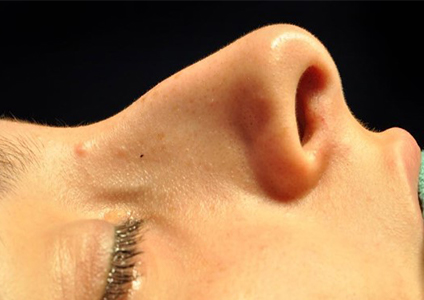
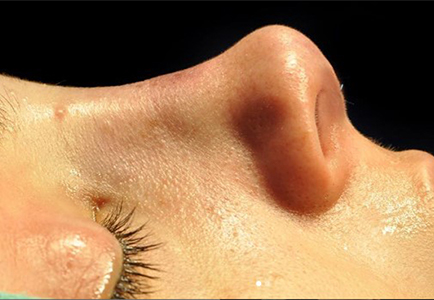
One Glendale patient illustrates this approach. Along with correcting the structural cause of her breathing problems, Dr. Stepanyan reduced her nasal tip projection by just 2 mm, creating a softer, more balanced profile while preserving a natural appearance. The case showed that even modest cosmetic refinements can be incorporated into a functional rhinoplasty without overshadowing the primary goal of restoring nasal function.
The surgical plan is built around your stated priorities. Some patients choose surgery primarily to restore nasal function (breathing), while others pursue cosmetic refinement and discover that correcting a structural problem simultaneously improves nasal function.
When a deviated septum contributes to obstruction, septoplasty is commonly performed alongside rhinoplasty so the functional and cosmetic components work together rather than being treated separately.
Before committing, Dr. Stepanyan uses advanced 3D imaging to simulate your projected cosmetic result, helping you visualize how subtle refinements may affect your appearance while ensuring your expectations align with the surgical plan.
Ultimately, success depends on your reason for having surgery. Functional rhinoplasty is judged by how effectively it restores comfortable nasal breathing, while cosmetic rhinoplasty is measured by how naturally the nose complements the rest of the face.
When both procedures are combined, the goal is to improve breathing without sacrificing appearance or enhance appearance without compromising nasal function.
That balance is reflected in Dr. Stepanyan’s approach to rhinoplasty. Depending on your anatomy and surgical goals, he may recommend either an open or closed technique to achieve the safest, most predictable outcome.
Patient Dori experienced that philosophy firsthand. Just three weeks after surgery, she attended an event and later shared that none of her friends realized she had undergone rhinoplasty, reflecting Dr. Stepanyan’s goal of producing results that look natural rather than obviously surgical.
What to Expect with Functional Rhinoplasty
Functional rhinoplasty follows a structured, three-part process: an in-depth consultation, the procedure, and a guided recovery. Your candidacy is assessed during the consultation, so there is no pressure to commit before understanding your diagnosis and treatment options.
Each phase moves at your pace, with Dr. Stepanyan personally involved from the first visit through follow-up months later.
Consultation
Your journey begins with an in-depth consultation. Dr. Stepanyan reviews your symptoms and medical history and may order imaging to assess your nasal structures. A personalized surgical plan is crafted for your needs.
During your visit, you’ll spend at least one hour with Dr. Stepanyan, not a coordinator or assistant. He takes time to understand your breathing concerns before performing a detailed evaluation to identify the structural cause of your nasal obstruction. Depending on your anatomy and symptoms, your assessment may include:
- A review of your symptoms and medical history
- A comprehensive examination of your nose
- Nasal endoscopy or diagnostic imaging, when appropriate
- An evaluation of the structures affecting airflow, including the septum, nasal valves, and turbinates
If cosmetic refinement is also part of your goals, advanced 3D imaging and simulation allow you to preview your projected post-operative appearance before deciding on surgery.
This collaborative planning process helps you communicate your goals clearly while understanding how functional correction and aesthetic improvements can work together.
Patients describe the tone as unhurried and pressure-free. One patient noted that Dr. Stepanyan “listened, didn’t rush me, cared, was genuine.” The in-office consultation is free.
For patients who live out of state or cannot travel, virtual consultations are available to discuss symptoms and goals, though an in-person visit is still needed for the nasal examination and 3D imaging.
To schedule, call the Glendale office at (818) 551-0088.
Procedure
Functional rhinoplasty is performed under general anesthesia in almost all cases. IV sedation (twilight sleep) may be considered when clinically appropriate for limited procedures, such as minor tip plasties or alar base reductions. Incisions are discreetly concealed or placed inside the nostrils. Dr. Stepanyan reshapes internal nasal structures to correct airflow blockages and reinforce the airway while maintaining or improving your nose’s appearance.
During surgery, the procedure may include:
- Septoplasty: Straightening the septal cartilage and bone to improve airflow while preserving the structural support needed to maintain the bridge and nasal tip
- Turbinate reduction: Reducing enlarged turbinates while preserving their important role in warming, humidifying, and filtering the air you breathe
- Nasal valve repair: Reinforcing weakened internal or external nasal valves with cartilage grafts to restore a stable, open airway
- Cartilage grafting: Using cartilage from the septum, ear, or, when necessary, the rib to rebuild structural support without distorting the natural contour of the nose
Depending on your anatomy, the complexity of the procedure, and whether both breathing and appearance are being addressed, Dr. Stepanyan may recommend either an open or closed rhinoplasty approach.
- Open rhinoplasty uses a small incision across the columella to give the surgeon direct access to the nasal structures, and it is suited to primary rhinoplasty cases that require multiple corrections or complex reshaping.
- Closed rhinoplasty keeps all incisions within the nostrils, leaves no external scars, and suits more limited cosmetic goals that do not require full structural access.
When needed, Dr. Stepanyan places soft nasal packing inside the nostrils to control bleeding and support the internal structures as they heal. Packing is used selectively, not in every case, based on your anatomy and the extent of the repair.
The procedure typically takes one to two hours, depending on complexity. Surgery is performed in the practice’s AAAHC-accredited surgical center in Glendale.
After the procedure, you are transferred directly to the practice’s on-site 23-hour ambulatory recovery center, where the same experienced surgical team monitors you through the first stage of recovery.
Recovery
Patients typically go home the same day, although some may require additional monitoring at our 23-hour ambulatory recovery center. Expect nasal swelling and congestion during the first one to two weeks. Light activity may resume within days, while breathing continues to improve over several weeks to months as internal swelling subsides. We provide personalized aftercare and follow-up appointments to support healing.
Recovery progresses through well-defined stages. The splint and sutures are typically removed around seven days, and most patients return to non-physical jobs within 7 to 10 days, though timelines vary with healing.
Facial swelling and bruising may peak during the first two to three days after surgery. In Dr. Stepanyan’s reported experience, most patients have little to no visible facial swelling or bruising by about days four to five, although nasal swelling may persist as healing continues.
A general sense of the timeline helps you plan, though every patient heals differently:
- Week 1: The splint and any internal supports stay in place, and most congestion and pressure are concentrated here. Keep your head elevated and avoid heavy lifting or strenuous activity.
- Days 7 to 10: The splint and sutures are typically removed. Visible swelling and bruising recede, and many patients return to non-physical work.
- Weeks 2 to 4: Breathing gradually improves as internal swelling settles. Dr. Stepanyan generally recommends avoiding strenuous activity for approximately one to two weeks, although restrictions depend on the invasiveness of the procedure and the type and intensity of activity. Resume strenuous exercise only when he clears you to do so.
- Months 1 to 12: Breathing continues to improve as the tissues fully settle, and any subtle swelling at the nasal tip refines gradually over three to 12 months, particularly after more complex structural work.
Patients also benefit from continuity of care throughout recovery. Following surgery, our team monitors your initial recovery at Stepanyan Surgical Arts Center. Our facility also includes a 23-hour ambulatory recovery center for patients who require additional postoperative monitoring.
Long-term follow-up is equally important. One Glendale patient, Lianna M., underwent a combined procedure that addressed a deviated septum, breathing problems, a nasal hump, and a drooping tip in a single surgery, and reports that her nose now looks natural and breathes better.
Dr. Stepanyan’s commitment continues well beyond the operating room, with follow-up check-ins reported for years after surgery.
Individual recovery and outcomes vary with your anatomy, how your body heals, the severity of the obstruction, and the extent of the correction; candidacy and realistic expectations are determined during an in-person consultation.
What If I Had a Previous Rhinoplasty and Now Have Breathing Problems?
Dr. Stepanyan specializes in revision rhinoplasty, addressing both cosmetic and functional concerns from previous surgeries.
If your first nose job left you unable to breathe properly, you are not alone. Many patients arrive at the Glendale practice after years of airflow problems caused by an initial rhinoplasty, whether from excessive cartilage removal, nasal valve collapse, or a deviated septum that was never fully corrected.
Rather than improving over time, these problems often become more noticeable as swelling resolves and the weakened nasal framework struggles to support normal airflow.
Seeking another surgery after a disappointing experience is understandably difficult. You trusted a surgeon once, and the result did not meet your expectations. Feeling cautious about revision surgery is a reasonable response.
That is why every consultation begins with an honest discussion of what can realistically be improved, not promises of perfection.
Revision rhinoplasty is more technically demanding than primary nose surgery. The first surgery altered your nasal anatomy, left scar tissue, and removed cartilage that cannot grow back, and these constraints restrict what a revision surgeon can do.
Scar tissue, altered structures, and limited remaining cartilage reduce surgical options, making careful planning and surgical expertise especially important.
A surgeon skilled only in primary rhinoplasty may lack the specialized expertise to address the complex anatomy left behind by the first operation. During a revision evaluation, Dr. Stepanyan assesses:
- Your previous surgical history
- Your current breathing function
- Scar tissue and areas of structural collapse
- The amount of healthy cartilage available for reconstruction
- Previous operative reports, when available, to help guide surgical planning
When excessive cartilage removal has weakened nasal support, he uses cartilage grafts, often harvested from your own rib, to rebuild the structure and reopen the airway. Because it comes from the patient’s own body, rib cartilage has a very low risk of immune reaction, although graft and donor-site complications remain possible.
The goal is not to recreate the nose exactly as it existed before surgery. Instead, the focus is on restoring breathing, rebuilding structural support, and achieving the best possible functional and aesthetic outcome within the limitations of the existing anatomy.
When a previous surgery has removed too much structural support, reconstruction often becomes the priority.
Depending on your needs, Dr. Stepanyan may use cartilage grafts, frequently harvested from your own rib when additional support is required, to reinforce weakened areas, reopen the airway, and restore long-term nasal stability while preserving a natural appearance.
One Healthgrades reviewer who had been unable to breathe properly for more than a year after a closed rhinoplasty by another surgeon reported after revision with Dr. Stepanyan: “I could not possibly feel better because of how good my breathing has gotten. Dare I say, it’s better than it was before the injury.”
Out-of-state patients travel to the Glendale practice specifically for revision cases, which positions Dr. Stepanyan as a destination specialist for patients who have exhausted local options.
If you are considering revision, your consultation should focus on one question: Does this surgeon understand that breathing comes first, and does he have the expertise to work within the constraints of your altered anatomy?
Real Patient Stories: Breathing Restored in Glendale
The change from struggling to breathe to taking full, easy breaths through both nostrils is real for the patients Dr. Stepanyan treats in Glendale and across Los Angeles.
These accounts come from our patients and their publicly shared reviews.
One patient had endured 15 years of breathing through a single nostril after a nasal injury that affected sleep, exercise, and daily comfort.
After functional rhinoplasty with Dr. Stepanyan in Glendale to correct the deviated septum and structural damage, the patient reported: “Not only did I have an amazing aesthetic with the outcome of the rhinoplasty, I was able to take in more oxygen and feel better than ever.”
Lianna M. presented with four concurrent issues: a deviated septum, breathing problems, a prominent hump along the bridge, and a drooping tip. Dr. Stepanyan addressed all four concerns in a single procedure at our Glendale surgical center. Lianna reports improved breathing and a more balanced profile.
A third patient broke his nose and underwent a closed rhinoplasty with another surgeon, which left him unable to breathe properly for more than a year. After two other surgeons declined to attempt a revision, he came to Dr. Stepanyan, and his breathing improved beyond what it had been before the injury. As he noted in a five-star Healthgrades review: “Not only my nose looks great, but I can breathe again.”
These cases reflect the range of functional and revision rhinoplasty Dr. Stepanyan performs for Glendale patients and those traveling from across Southern California.
Nasal anatomy varies, and candidacy for functional rhinoplasty is determined during a personalized consultation. See our rhinoplasty gallery to view additional results, or read more testimonials to hear directly from patients.
“Not only did I have an amazing aesthetic with the outcome of the rhinoplasty, I was able to take in more oxygen and feel better than ever.”
“Not only my nose looks great, but I can breathe again.”
How Much Does Functional Rhinoplasty Cost in Glendale?
Functional rhinoplasty in Glendale generally ranges from about $12,000 to $18,000 and up, depending on case complexity, anesthesia and surgical facility fees, and whether procedures such as septoplasty are combined.
For local comparison, nasal surgery in Beverly Hills typically runs higher, around $20,000 to $30,000 and up. Your total fee consists of the surgeon’s fee, the anesthesia fee, and the surgical facility fee. Revision cases are usually longer and more complex than primary procedures.
The final cost depends on the amount of structural correction required.
Procedures involving cartilage grafting, nasal valve reconstruction, combined functional and cosmetic rhinoplasty, or revision surgery generally require additional operating time and surgical complexity, placing them toward the higher end of the range.
Dr. Stepanyan determines the exact treatment plan and provides personalized pricing after your in-person consultation and examination.
Serving Glendale, CA
Whether you’re seeking answers for long-standing breathing problems, considering revision surgery, or exploring cosmetic rhinoplasty alongside functional correction, your consultation is an opportunity to receive a thorough evaluation, discuss your goals, and understand your treatment options without pressure.
Stepanyan Surgical Arts Center serves patients throughout Glendale, Pasadena, Burbank, Studio City, and the greater Los Angeles region for functional rhinoplasty, nasal surgery, and facial plastic surgery procedures.
The practice’s trilingual team speaks English, Armenian, and Russian, providing culturally fluent care for Glendale’s Armenian, Persian, Middle Eastern, and other diverse communities.
For patients traveling from outside the area, virtual consultations are available to discuss symptoms, goals, and treatment options before their in-person evaluation.
Patients are welcome at either practice location:
- Glendale Surgical Center 1500 E. Chevy Chase Dr., Suite 430 Glendale, CA 91206 Phone: (818) 551-0088
- Beverly Hills Office 436 N. Bedford Dr., Suite 218 Beverly Hills, CA 90210 Phone: (310) 269-8585
If you’re ready to breathe easier and improve your quality of life, functional rhinoplasty by Dr. Martin Stepanyan offers natural-looking, medically effective results with unmatched care. Schedule your private consultation by calling (818) 551-0088 or request an appointment online, and begin your journey to better breathing!
Frequently Asked Questions
Absolutely. Many patients enhance both function and appearance in a single surgery. When functional and cosmetic goals coexist, Dr. Stepanyan can coordinate both in a single session, typically under general anesthesia, allowing you to recover from both treatments at the same time rather than undergoing two separate recoveries.
Septoplasty fixes a deviated septum. Functional rhinoplasty may also include repairing valves, reducing turbinates, or reconstructing other structures.
Expect nasal congestion and swelling during the first one to two weeks, with gradual improvement over several months. In Dr. Stepanyan’s experience, most patients have little to no visible facial swelling or bruising by approximately days four to five. Splints and sutures are typically removed around day seven, and many patients return to non-physical work within 7 to 10 days. Strenuous activity is generally restricted for approximately one to two weeks, depending on the procedure and activity type. Individual recovery timelines vary.
The primary goal is improved function, but subtle shape changes may occur. Dr. Stepanyan strives for natural, harmonious outcomes. Patients seeking breathing correction alone can undergo surgery without intentionally changing the nose’s external appearance. If you also want cosmetic refinement, such as hump reduction or tip reshaping, it can be done during the same operation. Any aesthetic changes are patient-driven, not automatic.
For mild or allergy-related issues, medications and sprays may help. However, structural problems such as a deviated septum, nasal valve collapse, or enlarged turbinates cannot be physically corrected with medication alone. Surgery is usually considered only when the obstruction is significant and conservative options have not provided adequate relief.
Open rhinoplasty uses a small incision across the columella, along with internal incisions, giving Dr. Stepanyan direct visibility for complex reshaping, structural corrections, and revision cases. Closed rhinoplasty keeps all incisions within the nostrils, so it usually avoids a visible columellar scar and suits more targeted corrections. He selects the technique based on your anatomy and the complexity of the work.
Nasal packing is a soft material placed inside the nasal cavity during surgery to control bleeding and support healing structures. It is not required in every functional rhinoplasty; it depends on the extent of internal work. When used, packing is typically removed within the first one to three days, separate from the external splint, which comes off around day seven.
Revision rhinoplasty is needed when a prior nose surgery leaves persistent breathing problems, asymmetry, or structural issues, often from excessive cartilage removal or an uncorrected deviated septum. Breathing complications such as nasal valve collapse after a primary rhinoplasty are functional indications, and cartilage grafts are often used to rebuild support and reopen the airway.
The strongest candidates for functional rhinoplasty combine cosmetic and maxillofacial surgical training to address both nasal structure and airflow. A board-certified plastic surgeon or facial surgeon with that combined background is well-suited to these cases. Dr. Stepanyan’s MD, DMD, FAACS, and FACS credentials, continuous board certification since 2003, and more than 2,000 nasal surgeries across Los Angeles County make local surgical volume a concrete point of difference.
The best way to tell is through a medical evaluation, but your symptoms can provide useful clues. Seasonal congestion, itching, sneezing, and improvement with antihistamines or steroid nasal sprays often suggest allergies. A consistently blocked nostril or symptoms that don’t improve with medication may indicate a structural problem, such as a deviated septum or nasal valve collapse. Because many people have both, an examination is needed to confirm the cause.
Most patients describe pressure and congestion, not sharp pain, in the first week. Most functional rhinoplasty procedures use general anesthesia, so patients do not experience pain during surgery. IV sedation may be considered for selected minor procedures. Postoperative discomfort is typically managed with medication and Dr. Stepanyan’s aftercare instructions.
Functional rhinoplasty is generally considered once facial growth is largely complete, typically around ages 16 to 18 in girls and 18 to 20 in boys, although clearly documented structural breathing problems may be evaluated on a case-by-case basis. Dr. Stepanyan assesses each younger patient’s development and anatomy individually and involves a parent or guardian in the planning.
Ready to Get Started?
If you are ready to breathe easier, the next step is a consultation. Dr. Stepanyan’s goal is individualized, compassionate care that helps each patient become a more confident version of themselves, with breathing first and appearance addressed as a natural, balanced restoration of their own face.
The consultation is free, takes at least one hour, and is unhurried, with 3D imaging available so you can visualize results before committing.
Whether you’re seeking relief from chronic nasal obstruction or need a second opinion after a previous surgery, the goal is the same: restore comfortable breathing while preserving the natural character of your face.
Call the Glendale office at (818) 551-0088 or visit StepanyanSurgical.com to schedule your consultation and take the first step toward breathing comfortably again.
Ready to Get Started?
or request a consultation below
“Best decision I have ever made in my life was having Dr. Stepanyan be the surgeon for my rhinoplasty. I am SO happy with the outcome. I always get the best compliments on my nose. He is a true artist and professional.”
— Nicole M.